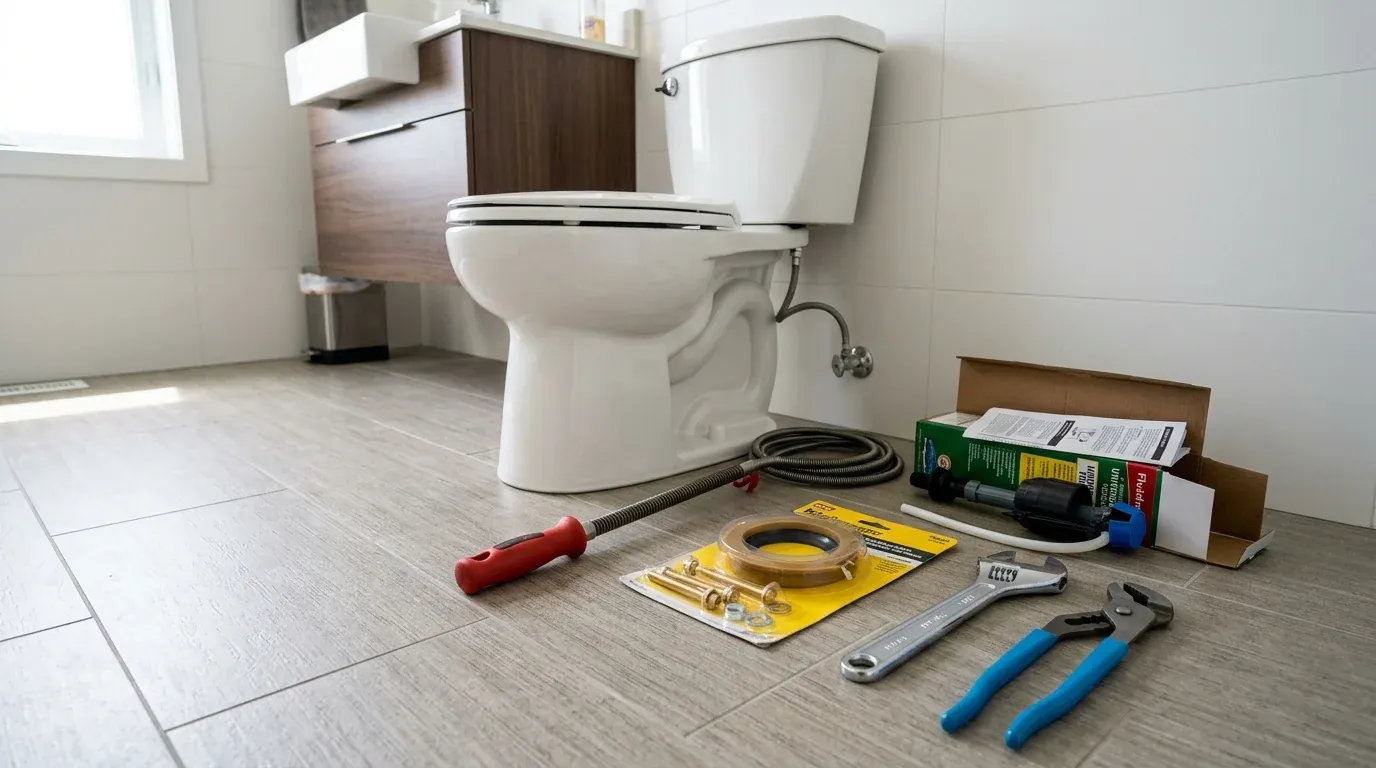
Continuous water hissing, phantom flushing, and high utility bills resolved by replacing warped rubber flappers, fill valve diaphragms, and float controls.
A running toilet can silently waste over two hundred gallons of clean municipal water each day, drastically inflating monthly utility expenses. Constant water loss typically originates from a degraded flapper valve that no longer creates a watertight seal against the flush valve seat, or a fill valve that fails to shut off when tank water reaches the waterline mark. Technicians evaluate internal tank components, test dynamic incoming water pressure, and replace compromised rubber seals with chemical-resistant silicone flappers designed to resist municipal chloramines. We adjust the float mechanism and tank refill tube to prevent water from spilling down the overflow pipe, restoring silent, efficient operation to your bathroom.
Warning Signs & Common Symptoms
Contact a plumbing professional if you observe any of the following indications in your bathroom:
Alert: Toilet spontaneously refills for five seconds every fifteen to twenty minutes
Alert: Constant hissing or trickling sound emanating from inside the ceramic tank
Alert: Water ripples continuously on the surface of the bowl long after a flush
Alert: Utility bills show unexplained spikes in household water consumption
Our Step-by-Step Diagnostic & Repair Protocol
Every service call follows structured trade protocols to guarantee lasting mechanical results:
Performing diagnostic dye testing to verify the exact leak path into the bowl
Testing dynamic incoming household water pressure against 80 PSI limits
Removing degraded rubber flappers and cleaning mineral scale from the valve seat
Replacing worn fill valves with heavy-duty commercial diaphragm assemblies
Calibrating tank float heights and trimming refill tubes to exact factory specifications
Frequently Asked Questions: Running Toilet Repair
Phantom flushing occurs when a degraded flapper or flush valve gasket allows tank water to slowly leak down into the bowl. When the water level drops below the float set point, the fill valve opens briefly to top off the reservoir.
A moderately running toilet can waste between thirty and two hundred gallons of potable water per day. Over a quarterly billing cycle, this unnoticed leakage can inflate household municipal water utility charges by hundreds of dollars.
Hissing indicates that water is forcing its way through a partially closed fill valve diaphragm or spilling continuously over the open top of the overflow tube. Adjusting the float level or replacing the fill valve stops the noise.
Municipal chlorine and chloramines chemically attack standard natural rubber flappers, causing them to warp, blister, or turn gummy within two to three years. Installing chemical-resistant silicone or thermoplastic flappers prevents premature breakdown.
Setting the float higher than the lip of the overflow tube causes the fill valve to never shut off because water continuously escapes down the tube. Adjusting the adjustment screw lowers the water level one inch below the overflow lip.
A flapper leak involves the hinged seal that lifts during a flush, whereas a flush valve gasket failure occurs at the base of the overflow tower where it seals against the bottom of the ceramic tank. Both require component replacement to stop leaks.
Rapidly fluttering fill valve diaphragms create high-frequency hydraulic shockwaves that vibrate throughout residential copper or PEX pipes. Replacing the defective valve and checking household water pressure eliminates the banging sound.
Drop five to ten drops of dark food coloring into the ceramic tank and avoid flushing for twenty minutes. If tinted water appears inside the bowl, your flapper or flush valve seal is leaking water into the drainage system.
Replacing the complete fill valve assembly provides far greater long-term reliability than swapping out the top diaphragm seal. Modern commercial fill valves include fresh filter screens, new float mechanisms, and updated anti-siphon protection.
Fast Service for Running Toilet Repair
Technicians carry commercial replacement components to diagnose and complete repairs on the first visit.