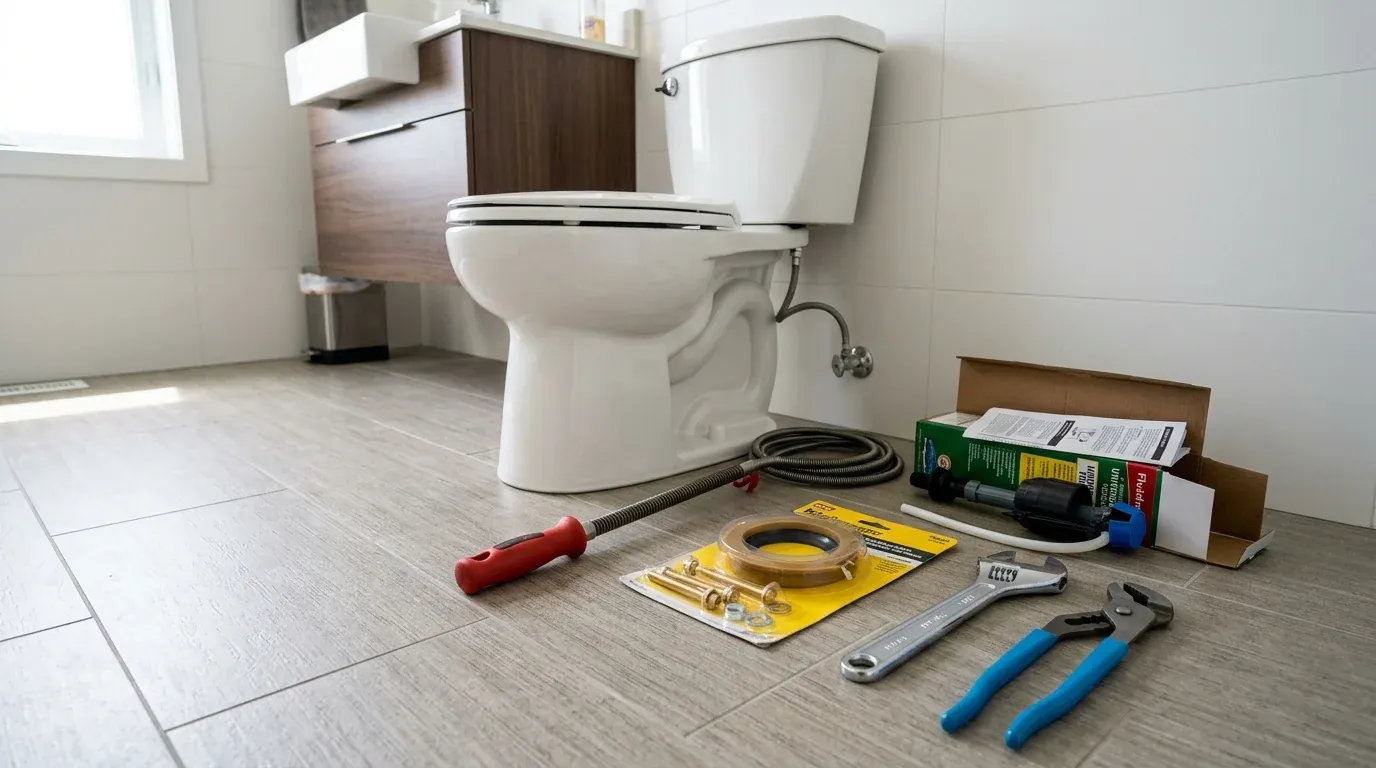
Unstable, rocking toilets place severe mechanical strain on the underlying plumbing connection, quickly tearing the pliable wax ring and allowing noxious sewer gases to escape into your living space. Rocking occurs when cast iron or PVC closet flange slots crack, closet bolts pull loose, or uneven tile leaves a gap beneath the porcelain skirt. Plumbers anchor heavy-gauge stainless steel repair collars directly into the concrete or wooden subfloor to rebuild broken bolt slots. We shim the porcelain base with rigid composite spacers so the toilet cannot wobble under body weight, install heavy solid brass bolts with double nuts, and compress a fresh reinforced wax gasket for permanent stability.
Warning Signs & Common Symptoms
Contact a plumbing professional if you observe any of the following indications in your bathroom:
Alert: Toilet bowl visibly rocks, wobbles, or creaks whenever someone sits down
Alert: Closet bolts spin freely without tightening or show heavy surface rust and corrosion
Alert: Persistent sewer gas smells linger in the bathroom even without visible water leaks
Alert: Grout or caulking around the base of the toilet is cracked, chipped, or separated
Our Step-by-Step Diagnostic & Repair Protocol
Every service call follows structured trade protocols to guarantee lasting mechanical results:
Disconnecting water lines, removing the toilet bowl, and removing all aged wax gasket material
Inspecting the closet collar for stress fractures, cracked bolt channels, or subfloor rot
Securing heavy-gauge stainless steel repair rings directly into concrete or wooden joists
Installing solid brass closet bolts equipped with locking washers and double-nut assemblies
Positioning a reinforced wax ring and setting the toilet with non-rotting composite shims
Applying mildew-resistant perimeter silicone while leaving the rear open for leak detection
Cast iron flanges corrode from exposure to sewer moisture and escaping toilet effluent. PVC and ABS flanges crack when closet bolts are overtightened during installation or when an unlevel toilet twists under daily body weight.
Professional plumbers utilize specialized stainless steel split repair rings or clamshell brackets that clamp securely over the damaged flange. These heavy-duty collars screw directly into the subfloor, restoring strong bolt anchorage.
Tightened closet bolts that still allow the toilet to rock indicate that the finished tile floor is uneven, or the flange sits too high above finished floor grade. Installing composite leveling shims underneath the porcelain skirt stabilizes the fixture.
Plumbing code specifies that the bottom of the closet flange ring should rest flat on top of the finished floor surface. When tile is added during remodels without raising the flange, extra-thick wax gaskets or flange extenders are necessary.
Split rings slip underneath or over the damaged flange collar and interlock tightly. Heavy-duty screws drive through the steel plate into the subfloor, providing fresh, reinforced channels that closet bolts cannot pull out of.
Vitreous china is extremely hard but brittle under point pressure. Overtightening metal closet nuts against the porcelain flange ears will crack the base instantly, requiring complete replacement of the toilet bowl.
Any movement of the toilet breaks the airtight seal of the wax ring beneath the porcelain horn. Once breached, noxious methane and sewer vapors venting from the main soil stack seep into the bathroom atmosphere.
Plumbing professionals exclusively utilize rigid plastic or composite shims that will not rot, compress, or absorb moisture over time. Wooden shims degrade under bathroom humidity and cause recurrent bowl instability.
Cracked flange collars prevent closet bolts from holding the bowl firmly against the floor. Every time someone sits on the toilet, the porcelain tilts, pinching and distorting the wax until wastewater forces a channel through.
Fast Service for Toilet Flange Repair & Resetting
Technicians carry commercial replacement components to diagnose and complete repairs on the first visit.